


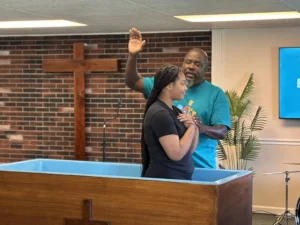


If you came to our Friday night Bible study, you already learned that God’s dwelling place is present with you wherever you go. In 1 Corinthians 3:16, Paul asks a direct question: “Do you not know that you are a temple of God and that the Spirit of God dwells in you?” That means when a believer walks through the church doors on Sunday morning, the Spirit of the Lord walks in with them. But when each and every one of us comes together as a collective, it’s like building a fire. If you put together one log on fire, you get a little bit of heat.
But when you start stacking more logs, you don’t just get a simple fire; you get a bonfire. Understanding how to overcome unforgiveness is what keeps that spiritual bonfire burning brightly without the suffocating smoke of personal offense.
As I stood before our congregation, I could feel that collective warmth, but I also felt the urgent need to address what destroys our fellowship. We’ve been dealing with the topic of unforgiveness for the last few weeks, looking at how holding onto past traumas creates a deep separation between brothers and sisters, and ultimately damages our fellowship with God. My prayer for our message was simple:
“Father God, I pray over Your Word today. I pray over me as Your vessel. Let the words of my mouth and the meditation of my heart be acceptable in Your sight, O Lord. We pray in the name of our Lord and Savior Jesus Christ. Amen.”
The Hidden Rust of Unforgiveness in Our Daily Lives
We all have dealt with circumstances where someone has hurt us or done us wrong. If we aren’t careful, that unaddressed hurt begins to fester inside us like a hidden rot. As I shared with our church family, I had a friend who spent his entire life building up deep pain from how certain people treated him.
He was a Black man who grew up experiencing racial slurs, systemic oppression, and genuine threats on his life strictly because of the color of his skin. Over time, that pain turned into a deep hatred toward all white people. When personal offense or unresolved pain creeps into our hearts, learning how to forgive someone who hurt you becomes our only defense against bitterness.

I remember asking him what was going on beneath the surface. He laid out circumstance after circumstance, naming every person who had wronged him. At the very root of his pain was a deep, unyielding root of unforgiveness. We see this exact same dynamic playing out across our country today. National division gets placed on the backbone of labels like racism or political bias, and those labels give us a convenient excuse to detach ourselves from praying for others or living peaceably with our neighbors.
I saw this in my own home growing up. My dad would walk past a white person on the street, automatically assume they weren’t saved, look them dead in the eye, say, “Heaven or Hell? Jesus saves,” and just keep walking. But is that a true representation of the Kingdom of God? When the message of the gospel is delivered through a heart carrying resentment, people don’t see Christ; they just see hateful Christians.
We see this division everywhere, from local neighborhood disputes in St. Louis to national media outlets. Young boys are shot in our cities over the color of a hat, and families split apart over who is in the White House. We let 30-second clips on TikTok or sensationalized headlines on news networks dictate how we treat each other.
I love watching C-SPAN because you can watch a senator give a full, complex speech in Congress. But then you turn on the news, and they take a ten-second audio clip completely out of context to make it sound like something else entirely. That is exactly how Satan uses algorithms and media to manipulate our thinking and keep us from reconciling with one another.
The heaviness of holding onto those offenses acts just like rust on metal. It chips away at your spirit if you don’t do anything about it, eating away at the very fibers of what was supposed to be a solid construction. When you’re driving down the highway in St. Louis and someone cuts you off, the flesh wants to step on the gas, pull up alongside them, and make stern eye contact just so they know you’re mad. But the Kingdom calls us to a completely different standard. As I reminded our sanctuary:
“The heaviness is like a rust that grips onto the metal. It chips away if you don’t do anything about it. It starts eating away at the very fibers of what was supposed to be a solid construction. It’s like this within the body of Christ.”
Kingdom Business vs. Personal Conflict: The Cautionary Tale of Joab
To really understand what happens when we let offenses fester, we have to look at the story of Joab and Abner in 2 Samuel 3:26-30. Joab was King David’s general, a powerful commander in charge of the army. Abner was the leader of the opposing army under the house of Saul. Earlier in 2 Samuel 2:18-23, there was a fierce battle where Joab’s brother, Asahel, pursued Abner. Abner warned Asahel over and over to stop chasing him, but Asahel refused, forcing Abner to strike him down in self-defense.
Fast forward to chapter three. Abner comes to King David to make peace and unite the entire nation of Israel. This was kingdom business. It was an answer to prayer that David had waited forty long years to see. But when Joab heard that Abner had come and gone in peace, his personal bitterness took over. He sent messengers behind David’s back to pull Abner into a private meeting at the city gate. When Abner stepped aside to talk, thinking they were discussing kingdom strategy, Joab pulled out a blade and murdered him in cold blood to avenge his brother.

Think about how high the stakes were in that moment. Imagine being in a place where all the burdens you’ve carried could be settled in one night. You’re setting up a business, sitting across the table from investors, ready to sign the deal, and all that’s left is sending the funds. But then someone calls and says a war broke out across the globe, and everything crumbles. That is how David felt. A single man’s refusal to forgive shattered the peace of an entire nation.
Abner thought they were talking about government work and kingdom affairs, but Joab wasn’t thinking about the kingdom. He only cared about his personal conflict. As I shared during our message:
“Abner didn’t, Abner thought everything was cool because we were all government business. This wasn’t the issue of personal conflict, but rather it was government issue. It was kingdom business. So that when he took them to the side, his mind was on kingdom things… But rather, Joab didn’t have kingdom on his mind. He had his own personal conflicts. He didn’t care whether Asahel was right or whether Joab was right. He wanted his brother’s death to be avenged.”
When we let personal grievances override what God is doing, we sabotage the very peace we claim we want. Joab couldn’t just take his pain to God and lay it down at the altar. He wanted to handle it his way. That single act of unforgiveness prolonged civil strife and brought judgment on his entire family line. When we put our feelings above kingdom business, we drag everyone around us into our self-made battles.
Biblical Steps to Forgive Others and Restore Broken Fellowship
Knowing how destructive a bitter spirit can be, Jesus gave us clear, actionable steps for handling conflict in the body of Christ. In Matthew 18:15-17, He laid out a full plan for how we are to handle strife with one another. He told us that if a brother sins against you, go directly to them in private and address the offense. If they hear you, you’ve won your brother back. If they refuse to listen, take two or three others along. If they still refuse, bring it before the church.
Notice that Jesus doesn’t tell us to post about our issues on social media, vent to our friends, or circulate rumors through the grapevine. He tells us to go straight to the person in private. When we handle conflict God’s way, we protect the unity of the church. We can sit down across from someone over lunch, grab a cup of coffee, and talk face to face. I’ve seen people from completely different political backgrounds sit down at a table and actually talk. One person explains their perspective, the other listens, and suddenly they realize they had built up an entire character assassination based on a thirty-second clip online rather than getting to know the real person.

When we operate in kingdom business, we stop letting offense dictate our actions. We realize that choosing forgiveness as a decision, and letting go of unforgiveness allows us to obey God’s command even when our emotions are hurting. In Matthew 6:12-15, Jesus taught us to pray: “And forgive us our debts, as we also have forgiven our debtors.” He then added a sobering warning right after the prayer: if you forgive others their trespasses, your heavenly Father will also forgive you, but if you do not forgive others, your Father will not forgive your trespasses.
How can we, as believers who have been forgiven an impossible debt, turn around and hold grudges against others? It happens the moment we step outside of the kingdom mindset and fall back into our selfish desires. As I reminded our congregation:
“Imagine what the body of Christ would look like if offense was no longer present. Imagine what the country would look like where it doesn’t matter who you vote for, but we can actually still be brothers and sisters in Christ. If it actually looked that way, the people in power would be terrified because there would be such unity among us. Satan would be terrified to see two brothers in Christ come together in perfect unity.”
Breaking Generational Curses of Anger Through the Power of the Cross
When you try to conquer bitterness using human willpower, you quickly run out of strength. True freedom happens when we look beyond our own feelings and look directly at the cross of Jesus Christ. The early church father Justin Martyr understood this level of radical, kingdom-focused love. Standing in the middle of the Roman Empire, surrounded by a government that persecuted believers, he made a clear declaration to the Roman authorities.
He told them that Christians would be the best citizens in the empire. They would serve the poor, feed the hungry, care for the homeless, and love everyone around them. The only thing they refused to do was bow down and worship the emperor because there is only one true God. Even when it cost him his life, Justin Martyr chose love over hatred and faithfulness over self-preservation.
When we experience the love of God, it changes how we see the people who wrong us. In Isaiah 6:1-8, the prophet Isaiah had a vision in the year King Uzziah died. He saw the Lord sitting on a throne, lofty and exalted, and the train of His robe filled the temple. When you get a real vision of God’s holiness and His overwhelming presence, you stop keeping score of other people’s faults. You realize how much mercy you’ve been shown, and that mercy overflows into the way you treat your family, your neighbors, and even your enemies.

In Romans 5:6-11, Paul breaks down the foundation of gospel grace. He reminds us that while we were still helpless, at the right time, Christ died for the ungodly. God demonstrated His own love toward us in that while we were still sinners, Christ died for us. We weren’t acting friendly toward God when He saved us; we were His enemies. Yet, He did the work of reconciliation first.
Think about what Jesus endured on Calvary. As He hung on the cross for six agonizing hours, every breath required Him to push up on the iron nails driven through His feet just to exhale. He took on physical torture, public humiliation, and the full weight of human sin. Yet, He didn’t cry out in anger or demand vengeance against the soldiers mocking Him. Instead, He looked at the very people putting Him to death and said, “Father, forgive them, for they do not know what they are doing.”
With His final breath, Jesus declared, “It is finished!” In the original Greek, that word is tetelestai, which means “paid in full.” When Jesus died, He unlocked the power of it is finished to wipe our spiritual ledger clean and shatter every generational curse. The debt you owed to God was canceled. The wrath of God was satisfied.
When you realize how massive your debt was and how completely Jesus paid it, holding a grudge against someone else becomes impossible. You stop dragging the iron chain of past family trauma into your household. You stop letting anger pass down to your children. You break the cycle right at the foot of the cross, choosing to forgive as you have been forgiven.
Frequently Asked Questions About Biblical Forgiveness
What does the Bible say about unforgiveness?
The Bible teaches that holding onto unforgiveness damages our spiritual health and separates us from close fellowship with God. In Matthew 6:14-15, Jesus explicitly states that our willingness to forgive others reflects our understanding of God’s forgiveness toward us. Holding onto bitterness creates emotional and spiritual strain, acting like rust that chips away at the body of Christ.
How do I forgive someone who hurt me deeply?
Forgiveness is a deliberate choice, not an emotion. You begin by taking your pain to God in prayer, acknowledging the offense, and deciding to release the offender from your personal debt ledger. Following the pattern in Matthew 18:15-17, you seek peaceful resolution where possible, relying on the Holy Spirit to extend the same grace that Christ showed us on the cross.
Standing Together in Kingdom Unity
We cannot let the enemy use past wounds, media outrage, or political hatred to keep us divided. As believers, we are called to walk through the doors of our homes, workplaces, and local churches as ambassadors of God’s kingdom. When we resolve our anger, forgive quickly, and extend unconditional love to those around us, we display the true power of the gospel to the St. Louis region and beyond. Let’s choose to put down the heavy weights of offense, step out of self-protection, and stand together as a unified, burning fire for the glory of God.